
Opinion: ASEAN should widen partnerships to guard against food and energy shocks
A Mindanao Times commentary argues that President Marcos's attendance at the BRICS Summit in New Delhi shows how ASEAN could use broader economic ties to protect households from price shocks.
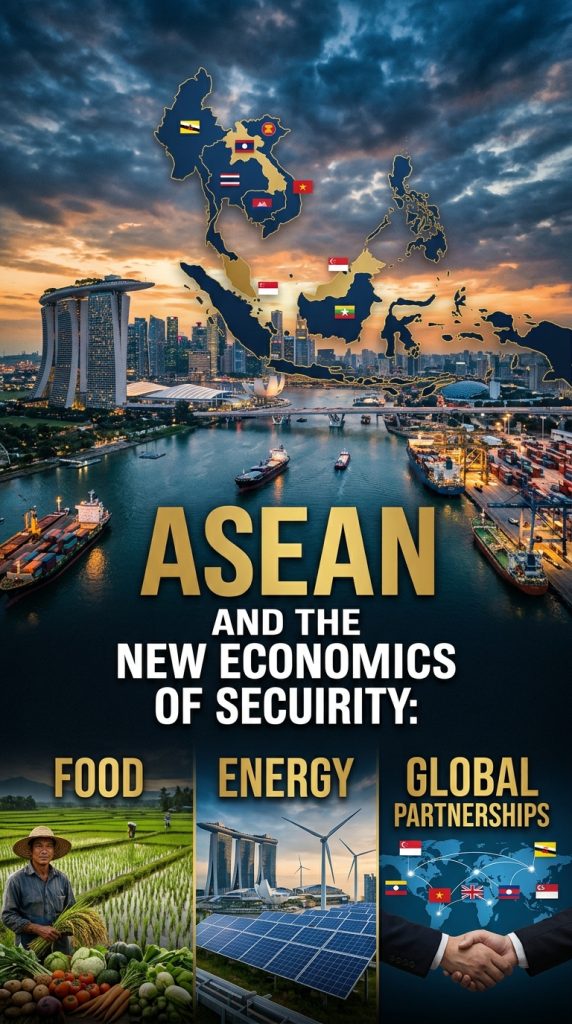
A commentary published by Mindanao Times argues that Southeast Asia needs a deliberate regional strategy for economic security, as reliance on imported fuel and rice leaves countries like the Philippines exposed to sudden price swings.
The writer uses President Ferdinand Marcos Jr.'s participation in the 18th BRICS Summit in New Delhi on September 12–13, 2026 as a starting point. Marcos attended at the invitation of Indian Prime Minister Narendra Modi, as an outreach representative of ASEAN, which the Philippines chairs in 2026. According to the piece, he and Modi discussed cooperation in defense, trade, space, railways, financial technology, education and tourism, and he met Indian business groups on agriculture, healthcare, digital payments and other sectors. After the visit, Marcos stressed the need to turn the Philippines–India strategic partnership into concrete programs.
The writer argues that higher oil prices drive up transport, electricity and manufacturing costs, while costly rice imports strain family budgets, especially for lower-income households. Rather than reacting country by country, ASEAN should build regional arrangements that diversify supply sources and strengthen collective bargaining.
Among the proposals: deepening trade within ASEAN, making fuller use of the Regional Comprehensive Economic Partnership, and strengthening the ASEAN Plus Three Emergency Rice Reserve. On energy, the writer calls for diversified ties with Gulf states, the United States, China and, within the limits of international sanctions, Russia, as well as faster ratification of a regional petroleum security agreement that provides for emergency fuel sharing.
The commentary also suggests a structured ASEAN–BRICS dialogue on food and energy, noting the summit's New Delhi Declaration and a proposed BRICS Grain Exchange, which the writer stresses is still only a proposal. It floats coordinated rice purchasing by importing countries and longer-term supply deals with producers such as India, Thailand and Vietnam.
The writer adds that imports cannot replace stronger local farming, urging investment in irrigation, climate-resilient seeds, storage, better weather forecasting and crop choices suited to local water supplies, while protecting farmers' livelihoods.
Why it matters for Davao
The commentary points out that the Philippines' reliance on imported petroleum and rice directly affects transport, power and food costs for households, which would include families in Davao City.
This article was written by the DavaoNews desk with AI assistance, using reporting by Mindanao Times. Facts come from the original report, which we credit and link below. Our editorial policy
Discussion (0)
Sign in with Google to join the discussion.
Sign in to commentNo comments yet. Start the conversation.