
Filipino engineer wins James Dyson global sustainability prize for quake damage sensor
De La Salle University graduate Aldrei Ong's Sentinel turns an ordinary concrete spacer block into a low-cost sensor that flags hidden structural damage after earthquakes.
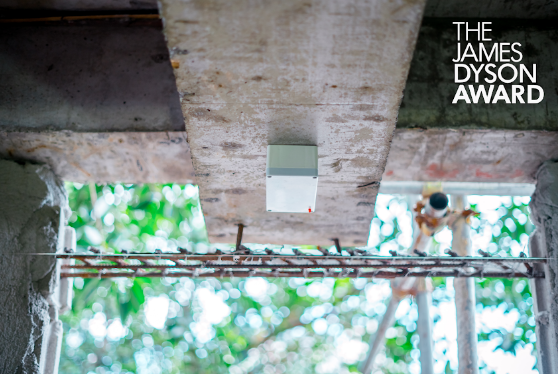
A young Filipino structural engineer has been named the 2026 Global Sustainability Winner of the James Dyson Award for Sentinel, a low-cost sensor meant to detect hidden damage inside concrete buildings after earthquakes, according to Mindanao Times.
Aldrei Ong, a De La Salle University graduate, will receive PHP 2,390,230 to continue developing the invention.
The report notes that earthquakes can leave cracks and internal damage in concrete that cannot be seen from the outside. Deciding whether a building is safe to re-enter usually depends on visual inspections and specialist testing. After a major quake, when many structures need checking at once, this can be slow and costly, leaving families, students, workers and patients waiting.
Sentinel builds on the concrete spacer block, a part already used in construction to hold reinforcing steel in place. Ong's version is made of self-sensing concrete with conductive materials. When the block cracks, its electrical resistance changes. Embedded electrodes link each block to a small electronic module that compares readings against the original baseline, and significant changes are sent wirelessly to an online dashboard so engineers can monitor a building remotely.
Because it replaces an existing component, the sensor can be added during construction without an extra structural element, which is meant to keep costs down and make large-scale use easier.
Ong developed the technology through master's research, mixing, curing and testing more than 125 concrete samples over more than a year. Sentinel sensors are now embedded in a building in the Philippines for real-world monitoring. He plans to keep validating the system, replace its hand-soldered electronics with a custom printed circuit board, and develop versions that can be fitted to existing buildings.
Dyson founder James Dyson called Sentinel "an ingenious solution" that could stop people from living or working in buildings at risk of collapse. Ong said the award "gives me the confidence to keep pushing Sentinel forward."
His former professor, Dr Bernardo Lejano, said he expects such sensors could eventually become a required part of reinforced concrete structures.
The 2026 Global Medical Winner is Rumble Rims, a low-cost infrared eye-tracking headset for concussion screening developed by Harvard University students.
Why it matters for Davao
In the earthquake-prone Philippines, a low-cost way to detect hidden structural damage could speed up safety checks of homes, schools, offices and hospitals after a quake, helping people know sooner whether buildings are safe to use.
This article was written by the DavaoNews desk with AI assistance, using reporting by Mindanao Times. Facts come from the original report, which we credit and link below. Our editorial policy
Discussion (0)
Sign in with Google to join the discussion.
Sign in to commentNo comments yet. Start the conversation.