
Commentary urges long-term water security strategy as strong El Niño looms
A Mindanao Times commentary argues that the Philippines must move beyond emergency water restrictions and treat water as an economic and public-health priority.
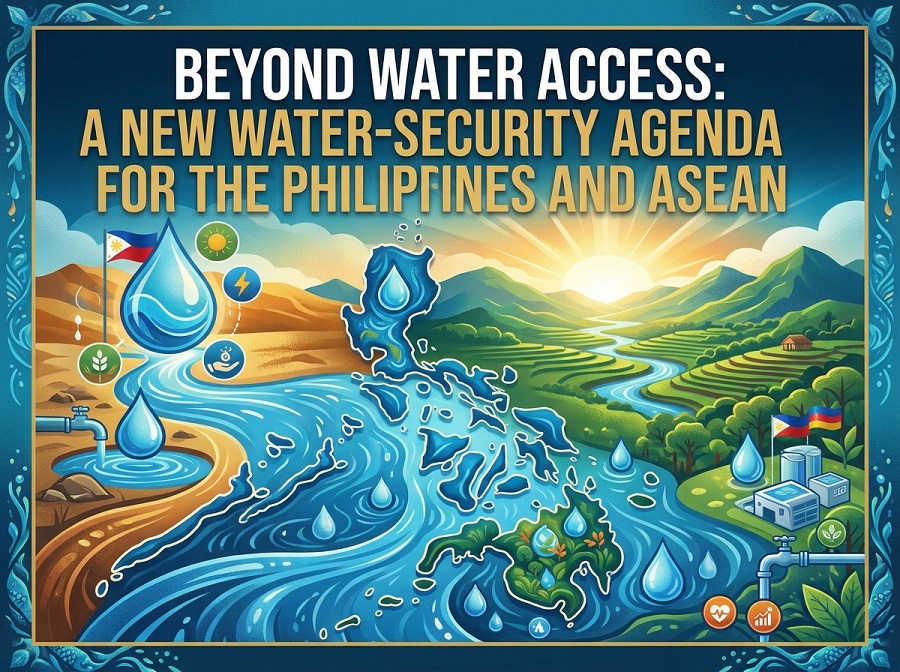
A commentary published by Mindanao Times argues that the Philippines needs a comprehensive, long-term water security strategy, backed by stronger local implementation and regional cooperation through ASEAN. It says this is more urgent now that a strong El Niño is under way.
The piece cites a PAGASA report dated October 7, 2026, which said a strong to very strong El Niño was present in the tropical Pacific. The weather bureau's outlook indicated the phenomenon could peak before the end of 2026 and persist into the first half of 2027. The commentary also notes that the Department of Environment and Natural Resources, in an October 5 announcement, urged households to conserve water, collect rainwater and avoid unnecessary use.
The writer argues that local governments, water districts, schools, hospitals, farms and businesses should prepare contingency plans before shortages become acute. The piece adds that water security is not only a drought problem, since floods can damage infrastructure and contaminate supplies.
Among its proposals are systematic rainwater harvesting with proper treatment standards, prompt repair of leaking pipes, published utility performance indicators, and the safe reuse of greywater. It also calls for aligning crops with local rainfall, using the Department of Agriculture's National Color-Coded Agricultural Guide Map. That tool rates the suitability of 21 economically important crops.
On groundwater, the commentary cites a February 2026 Philippine Institute for Development Studies release. According to that release, groundwater extraction rose by an average of 3.8 percent a year from 2014 to 2023. The writer warns against simply drilling deeper wells and calls for permits, monitoring and sustainable extraction limits.
The piece also points to World Bank support. This includes €212.7 million, or about ₱14.98 billion, in financing announced by the Department of Finance on October 9, 2026, for water and sanitation projects in Bohol, Siargao and Sulu. It also cites a policy loan that aims to raise the number of local water providers with sustainable business plans from 10 to 100 by 2027.
Why it matters for Davao
The El Niño outlook covers the whole country, and the commentary's call for contingency planning by local governments, water districts and households applies to communities across Mindanao, including Davao City.
This article was written by the DavaoNews desk with AI assistance, using reporting by Mindanao Times. Facts come from the original report, which we credit and link below. Our editorial policy
Discussion (1)
Sign in with Google to join the discussion.
Sign in to commentWith El Niño coming, what is your household doing to save water? Drums, rainwater catchment, schedules? Share your best tips for Davao homes.