
Philippine Eagle's survival tied to indigenous communities, says PEF
The Philippine Eagle Foundation honoured 16 indigenous partner communities in Malagos and handed over 3D landscape models meant to support indigenous-led forest protection.
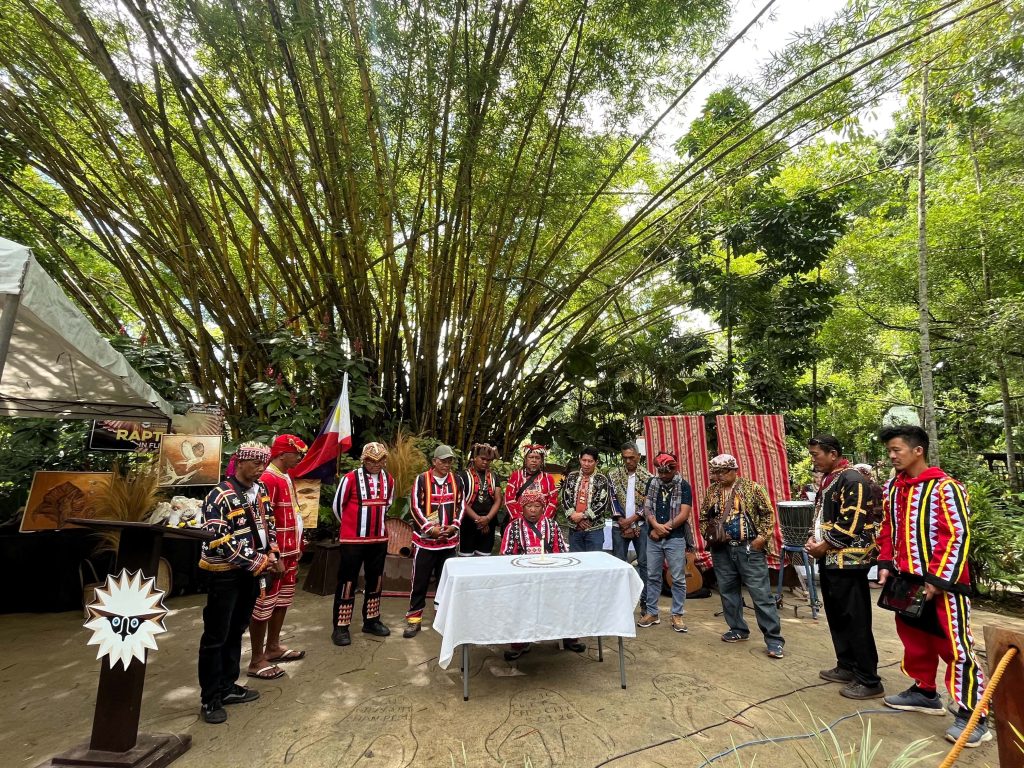
The survival of the critically endangered Philippine Eagle depends on the indigenous peoples whose ancestral domains cover much of the bird's forest habitat, the Philippine Eagle Foundation (PEF) said during an Indigenous Peoples' Month event in Davao City, according to Mindanao Times.
PEF held "KATUTUBO: Guardians of Ancestral Domains," a festival of indigenous culture, biodiversity and conservation, at the Philippine Eagle Center in Malagos, Baguio District, on Friday, Oct. 30. The event recognised the foundation's 16 indigenous partner communities across Mindanao. Six are in Davao City: the Obu Manuvu of Tambobong, Bagobo Klata of Sirib, Matigsalug of Datu Salumay, Unified Bagobo Tagabawa of Sibulan, Bagobo Tagabawa of Toril, and Ata of Paquibato. The rest are in Davao de Oro, Davao del Norte, Davao Oriental, Bukidnon, North Cotabato and Surigao del Norte.
PEF executive director Dennis Salvador told participants that protecting forests and wildlife had been part of their way of life long before conservation became a buzzword. He said caring for the eagle must go together with respecting indigenous rights, listening to indigenous knowledge and supporting indigenous leadership.
Jayson Ibañez, PEF director for operations, said the foundation's community-based approach began in 1995 in an ancestral domain in Salaysay, home of the Obu Manuvu. He described the nesting site there as possibly the third oldest in the country. According to PEF records, it has produced 16 eaglets. "The only way for the Philippine Eagle and biodiversity to thrive is if its human neighbors and the owners of the same ancient forest habitat are also thriving well," Ibañez said. He added that conservation groups must work with legitimate indigenous leaders and involve knowledge bearers as forest guards, organisers and restoration officers.
Tribal leaders also spoke about their own work. Datu Warnit Lumista of the Bukidnon-Higaonon Tribal Association said their domain covers about 36,547 hectares and three major watersheds. He said tribal forest patrollers there have been trained with PEF. Hernan Ambe of the Unified Bagobo Tagabawa of Sibulan described nature as the foundation of their identity and traditions.
During the event, PEF turned over Participatory Landscape Mapping (PALM) tools and 3D landscape models to the Higaonon–Buhita community in Malaybalay, Bukidnon and the Ata Manobo community in Talaingod, Davao del Norte. These were the second and third such models given to indigenous communities. The Obu Manuvu of Tambobong in Davao City was one of the pilot communities for the technology.
The models were developed by Rohan Fisher of Charles Darwin University and funded by Catholic Relief Services. They combine physical terrain models with projected digital data. PEF said they are meant to support indigenous-led landscape planning, forest protection and possible species reintroduction.
Why it matters for Davao
Several of PEF's partner communities, including those in Tambobong, Sibulan, Toril and Paquibato, are within Davao City. Their stewardship of ancestral forests is central to efforts to protect the national bird near home.
This article was written by the DavaoNews desk with AI assistance, using reporting by Mindanao Times. Facts come from the original report, which we credit and link below. Our editorial policy
Discussion (0)
Sign in with Google to join the discussion.
Sign in to commentNo comments yet. Start the conversation.