
DEPDev XI urges Davao Region LGUs to boost farm output and jobs to keep poverty down
Poverty among families in the region fell to 5.5% in 2025 from 11.3% in 2023, but a regional planning official warned that inflation, slow growth and disaster damage could erase the gains.
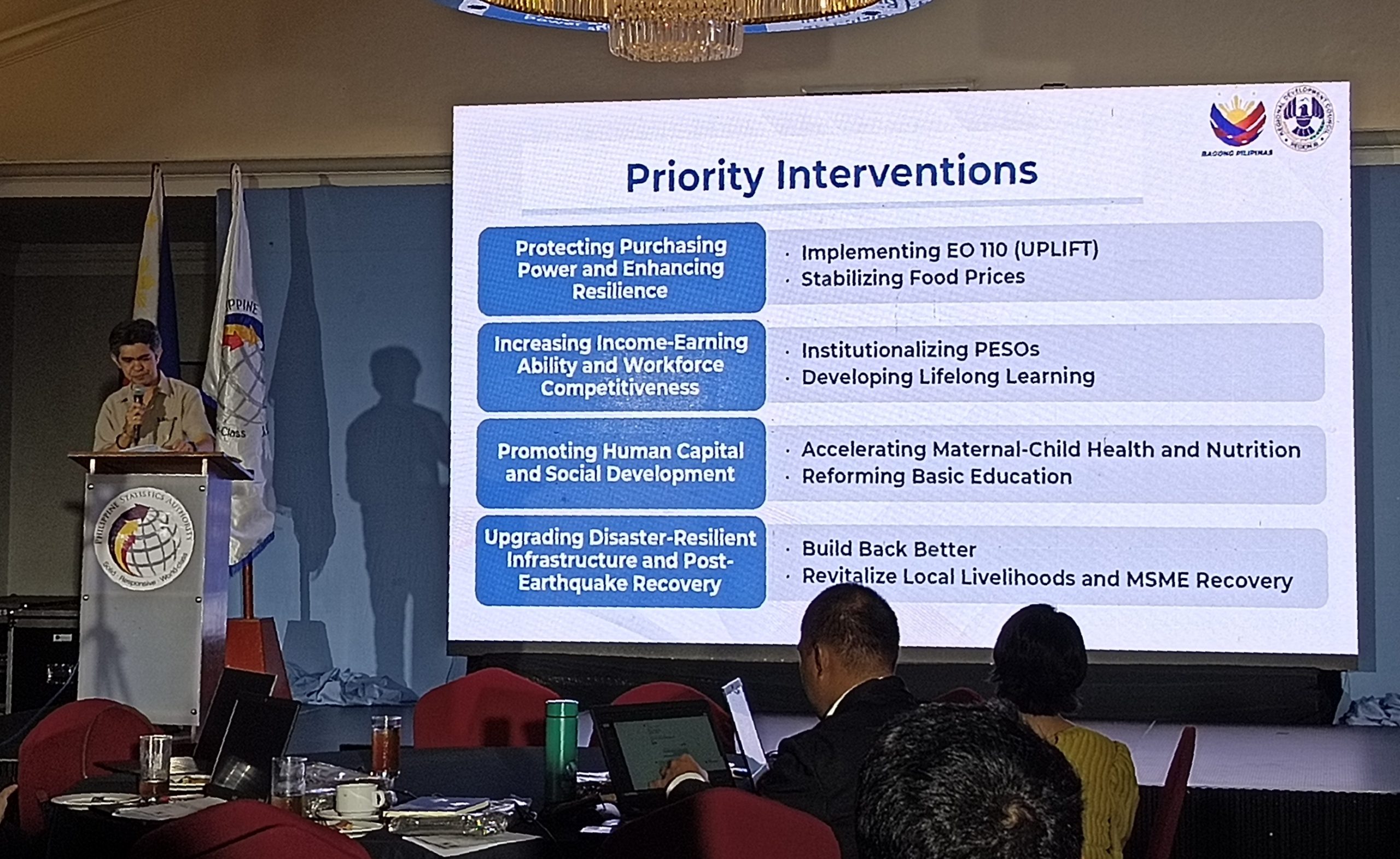
Local governments in the Davao Region must raise agriculture targets, close job-skills gaps and improve health and education services to keep poverty from climbing again, a regional development official said, according to Mindanao Times.
Rosendo Aya-ay, chief economic development specialist at the Department of Economy, Planning and Development (DEPDev) XI, said these measures are part of the midterm update of the Davao Regional Development Plan 2023-2028. He spoke at a forum on Tuesday, Nov. 10, where the Philippine Statistics Authority XI reported preliminary full-year figures showing poverty incidence among families dropped from 11.3% in 2023 to 5.5% in 2025.
Aya-ay cautioned that inflation, slow national growth and disaster damage threaten these gains, particularly for near-poor households. Inflation in the region has stayed above 8% in recent months, with food the largest household expense, according to the report.
To protect incomes, the region will implement Executive Order 110, the UP-LIFT program, to respond to the energy crisis and global oil price swings. Authorities will monitor the movement of fuel, food and medicines, and Kadiwa ng Pangulo outlets will keep selling affordable goods to vulnerable sectors, he said. The Regional Development Council (RDC) XI also passed Resolution No. 92, directing provincial governments to revise their targets for agriculture, forestry and fisheries.
"With updated targets, LGUs will work together to achieve a stronger, more resilient agricultural base that protects farmers and stabilizes consumer prices," Aya-ay said.
While the region posted a 97.1% employment rate in 2025, he said a persistent mismatch between jobs and skills remains. The plan calls for upgrading Public Employment Service Offices in all 54 local government units into full-service hubs, and expanding industry-aligned training with stackable micro-credentials in ICT, agribusiness, logistics and tourism.
On health, child stunting fell to 5.08% in 2025, but full immunization dropped to 57.15% and maternal mortality rose to 121.81. LGUs are urged to trace zero-dose children and expand primary care facilities. Elementary reading and math proficiency improved to 54.18%, and the region will prioritise reading literacy, teacher training and computerisation.
Recovery from the magnitude 7.8 earthquake that struck Southern Mindanao on June 8, 2026, which caused an estimated ₱4.54 billion in damage and losses, is projected to cost ₱10.1 billion. Aya-ay said plans include relocating displaced families and rebuilding schools and health facilities to withstand quakes up to magnitude 8.0. He added that poverty programs will be aligned with the JICA-supported Metro Davao urban development master plan as more people move to Davao City.
Why it matters for Davao
With food the largest household expense and inflation above 8%, measures on farm output, prices and jobs directly affect household budgets in Davao City. Officials also said poverty programs will be tied to the Metro Davao master plan as more people migrate to the city.
This article was written by the DavaoNews desk with AI assistance, using reporting by Mindanao Times. Facts come from the original report, which we credit and link below. Our editorial policy
Discussion (0)
Sign in with Google to join the discussion.
Sign in to commentNo comments yet. Start the conversation.