
Water, not farmland, may decide the future of food supply, experts warn
An Edge Davao feature gathers expert warnings that water scarcity, pollution and climate change threaten food security in the Philippines and worldwide.
The next major food crisis may stem from a shortage of water rather than a shortage of farmland, according to experts cited in an agriculture feature published by Edge Davao.
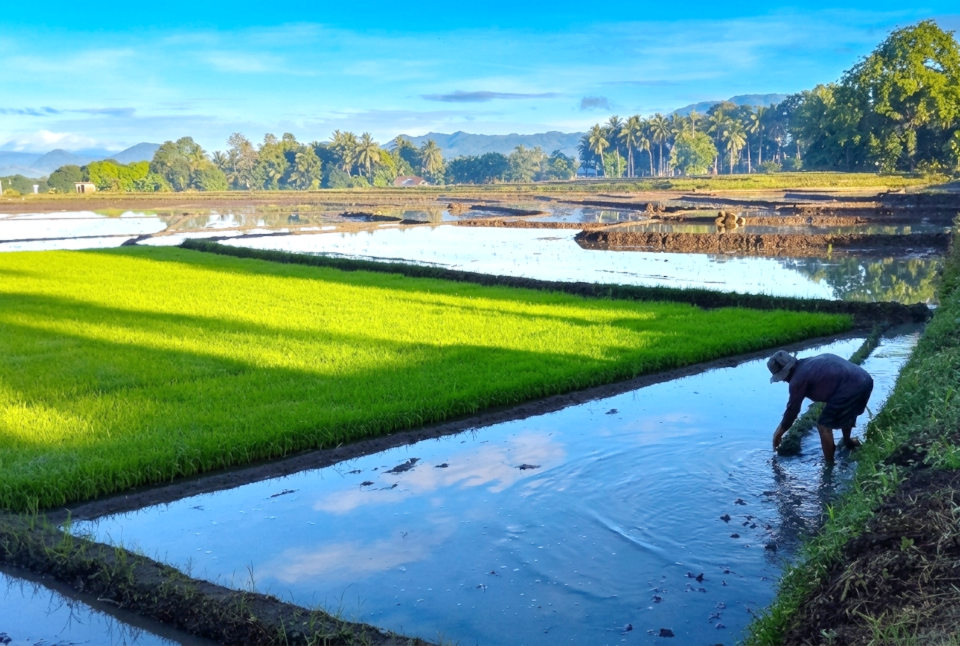
The article opens with a farmer who found his family's long-used irrigation canal reduced to a trickle and his rice seedlings wilting. It then sets out why water and food security are tightly linked. In the Philippines, agriculture accounts for about 85 percent of total water use, with industry and households sharing the rest. The International Rice Research Institute estimates that producing one kilogram of rice takes about 3,000 litres of water.
Lester R. Brown, president emeritus of the Earth Policy Institute, said a person drinks nearly four litres of water a day, but the food eaten daily takes at least 2,000 litres to produce. He warned that as demand grows across sectors, agriculture is usually the loser. Development sociologist Dr. Ruth Meinzen-Dick noted that rising incomes and diets heavier in meat, fish and dairy will add to competition for water.
The feature says the Green Revolution's gains, including roughly doubling "crop per drop" since 1960 according to the Food and Fertilizer Technology Center in Taipei, are hard to repeat. Groundwater is being drawn faster than it is replenished, and climate change is making rainfall less predictable. Dr. Thierry Facon, formerly of the Food and Agriculture Organization, said water use grew at more than twice the rate of population over the past century.
Pollution is shrinking usable supply as well. An Asian Development Bank report found 16 Philippine rivers considered biologically dead during dry months, with domestic waste blamed for 48 percent of water pollution, agricultural waste for 37 percent and industrial waste for 15 percent.
Experts quoted in the piece point to drip irrigation, soil-moisture sensors, laser levelling and precision farming as ways to grow more food with less water, along with household conservation and watershed protection. "Water is not like oil; there is no substitute," said Dr. Mark W. Rosegrant of the International Food Policy Research Institute.
Why it matters for Davao
Rice is the Filipino staple and depends heavily on water, so the supply and cleanliness of water sources bear directly on food production and prices for households, including those in Davao City.
This article was written by the DavaoNews desk with AI assistance, using reporting by Edge Davao. Facts come from the original report, which we credit and link below. Our editorial policy
Discussion (0)
Sign in with Google to join the discussion.
Sign in to commentNo comments yet. Start the conversation.