
Davao City plans marker at Tomb of the Unknown Soldier in century-old Masonic cemetery
The Office of the Culture and Arts is working with Masons to officially mark a World War II burial site inside the Filipino American Veterans Masonic Memorial Park in Barangay 6-A.
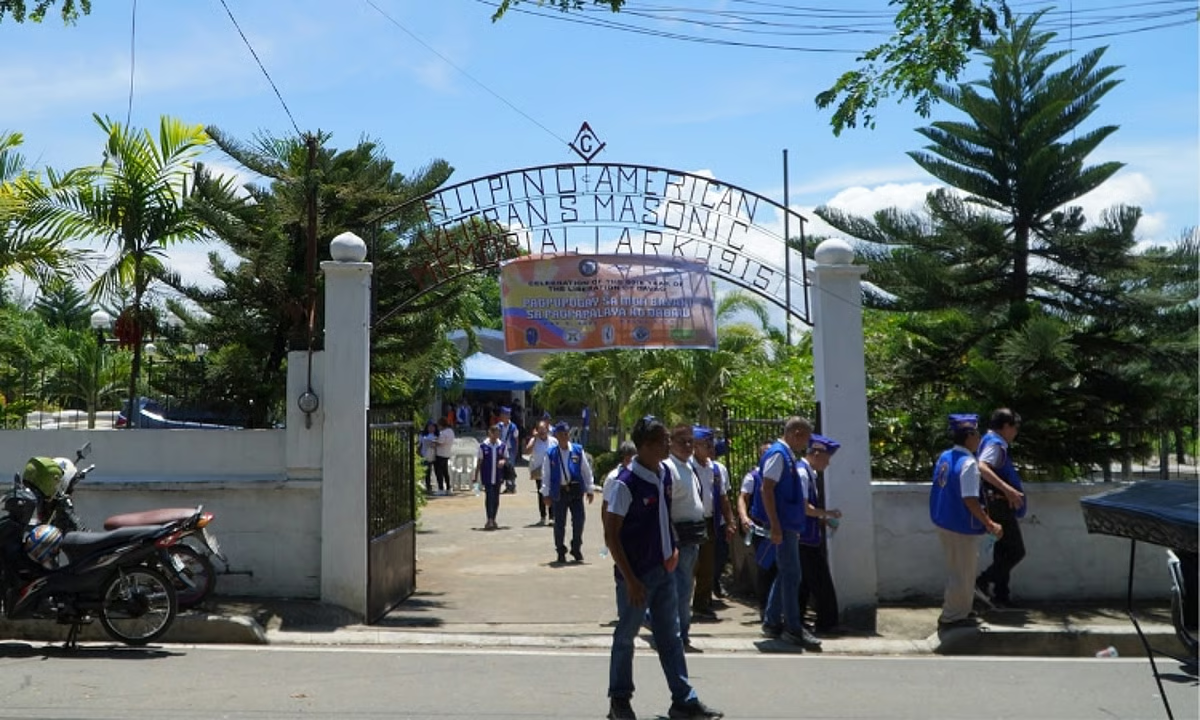
The Davao City government, through its Office of the Culture and Arts (OCA), is planning to install a marker or monument near the Tomb of the Unknown Soldier inside the Filipino American Veterans Masonic Memorial Park, according to a report carried by SunStar from PIA Davao.
OCA head Oscar Casaysay said the office is coordinating with the Masonic organization that maintains the site, which earlier put up its own marker. He said he hopes another resolution can be passed as part of an ordinance so that the city can officially install a marker.
The tomb holds the remains of several American, Filipino and Japanese dead from World War II. Once marked only by a simple white cross, the area at the edge of the cemetery has since been improved with a larger white cross, a steel marker, and concrete posts linked by steel chains. In 2018, American veterans living in Davao under American Legion Post 66 began work to identify the remains of 32 American and Filipino soldiers buried there.
Known locally as the Masonic Cemetery, the four-hectare park sits in Madapo Hills in Barangay 6-A, an area also called Wireless after an old wireless telegraph station. It is near the Wireless public cemetery and the Roman Catholic cemetery.
The cemetery was established in 1915 as one of two burial grounds designated by American authorities. It was first meant for American Masons but later took in American military veterans, many of whom had settled in Davao in the early 1900s to run abaca and coconut plantations. Among those buried there is Colonel George Thompson, described as a special representative of US President Calvin Coolidge to the Philippines who helped bring investment to Davao.
The American Cemetery Association managed the site until the late 1950s, when Mason and American veteran Alfred W. Roberts negotiated the transfer of rights to the land to the Davao Masonic Association Inc.
The city holds its annual Liberation of Davao commemoration at the cemetery every May 3, marking the return of American forces that ended the Japanese occupation. The report notes that apart from American-era civic buildings such as City Hall, few traces of the American pioneers remain in the city.
Why it matters for Davao
The cemetery is one of the few remaining sites tied to Davao's American-era history, and an official marker would formally recognise the World War II dead remembered there each Liberation Day.
This article was written by the DavaoNews desk with AI assistance, using reporting by SunStar. Facts come from the original report, which we credit and link below. Our editorial policy
Discussion (0)
Sign in with Google to join the discussion.
Sign in to commentNo comments yet. Start the conversation.