
Column: Upper-middle-income status must translate into gains for ordinary Filipinos
A Mindanao Times opinion piece argues that the country's new World Bank classification means little unless families feel stronger purchasing power, better jobs and more secure livelihoods.
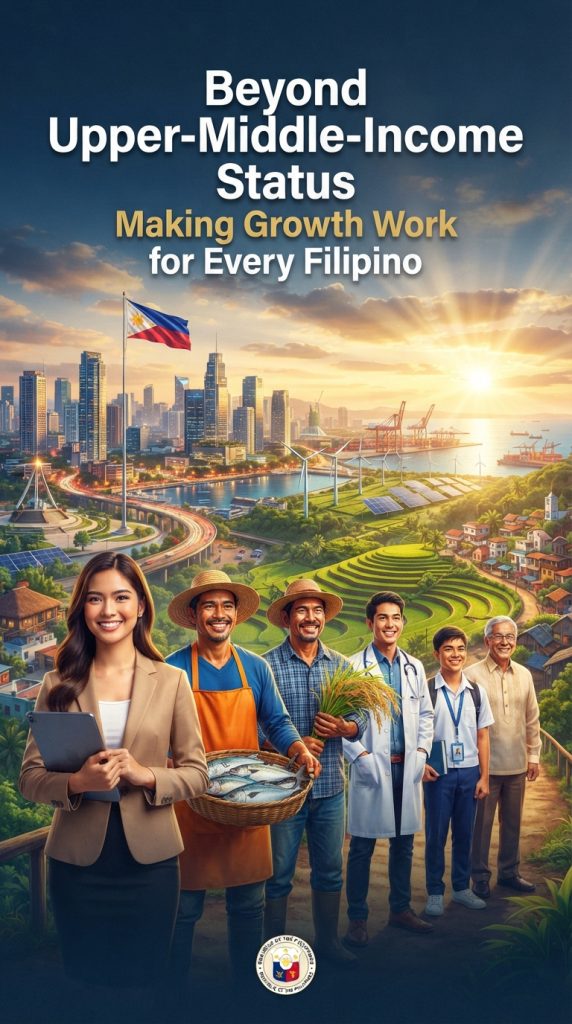
A column published by Mindanao Times argues that the Philippines' recent upgrade to upper-middle-income status should be judged by whether ordinary households can live better and more securely, not by national income figures alone.
The writer notes that the World Bank reclassified the country on 1 July 2026, ending nearly four decades in the lower-middle-income bracket after gross national income per capita reached US$4,850 in 2025. The column calls this a milestone worth celebrating, crediting economic expansion, reforms, the services sector and remittances from overseas Filipino workers, but says it marks the start of a new chapter rather than the end of the development journey.
To make the case, the piece cites Philippine Statistics Authority (PSA) data. Headline inflation rose to 7.8 percent in October 2026 from 7.2 percent in September. Food inflation eased to 6.4 percent, but transport inflation climbed to 20.1 percent and housing, utilities and fuel costs rose 9.3 percent. Rice prices were up 20.7 percent year-on-year. Inflation outside the National Capital Region reached 8.2 percent, compared with 5.9 percent in Metro Manila.
The column also points to third-quarter 2026 GDP growth of 2.1 percent, with agriculture contracting 4.8 percent and industry nearly flat, and a September unemployment rate of 5.4 percent alongside 11 percent underemployment, or about 5.56 million workers seeking more hours or better jobs.
The writer argues that policy should focus on creating better-paid jobs, especially for young people and women; strengthening technical and vocational training; investing in irrigation, cold storage, rural roads and food processing; and widening access to credit and technology for micro, small and medium enterprises, which the Presidential Communications Office says make up about 99.6 percent of registered businesses.
The piece adds that regional agreements from the 49th ASEAN Summit and the ASEAN Plus Three Summit in Manila in November 2026, including commitments on food and energy security, should be measured by the jobs, skills and lower costs they deliver to households.
Why it matters for Davao
The PSA figures cited show inflation running higher outside Metro Manila, which includes areas like Davao City, where households heavily dependent on daily wages, transport and utilities feel price increases most.
This article was written by the DavaoNews desk with AI assistance, using reporting by Mindanao Times. Facts come from the original report, which we credit and link below. Our editorial policy
Discussion (0)
Sign in with Google to join the discussion.
Sign in to commentNo comments yet. Start the conversation.