
Mindanao Times essay traces Philippine economy from colonial rule to ASEAN chairship
An essay in Mindanao Times argues that the Philippines has grown into an upper-middle-income economy but still has to turn growth into broad-based jobs and productivity.
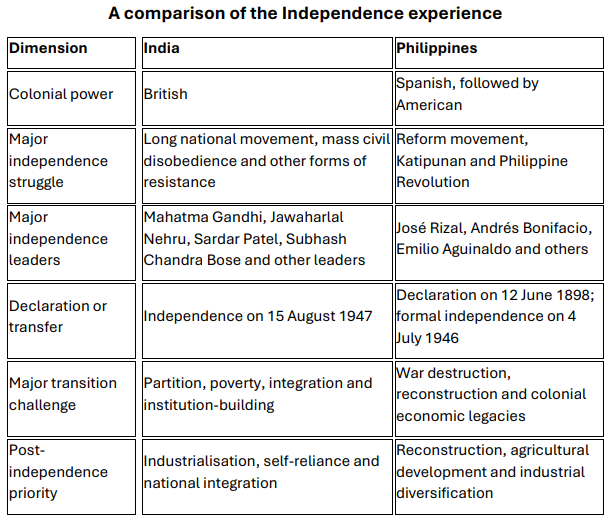
An analytical essay published by Mindanao Times argues that the Philippines' economic progress remains uneven despite its rise to upper-middle-income status. Strong services, remittances and a competitive workforce exist alongside weak productivity, regional inequality, infrastructure gaps and too few good jobs.
The essay places this record in a regional setting as the Philippines takes the ASEAN Chairship in 2026. The writer says the role goes beyond hosting meetings and includes helping shape ASEAN's economic integration and strategic balance. The essay also points to the country's ties with India, its membership in the Regional Comprehensive Economic Partnership (RCEP) and its security alliance with the United States.
Tracing the country's history, the essay notes that pre-colonial communities, including those in Mindanao, traded with China, Borneo and the wider Malay world. It argues that Spanish rule, including the Manila–Acapulco Galleon Trade from 1565 to 1815, served imperial interests rather than domestic industry. American administration from 1898 to 1946 introduced English-language education and new institutions but reinforced dependence on agricultural exports.
According to the essay, the country became independent on July 4, 1946, with a war-damaged economy, concentrated land ownership and widespread rural poverty. The Marcos era, which included martial law declared in 1972, is described as a time of rising foreign debt and weak accountability. The writer says it shows that state-led projects cannot replace accountable institutions and sound public finances.
The essay credits liberalisation since the late 1980s with expanding business-process outsourcing, electronics exports and remittances from overseas Filipino workers. It argues that many workers remain in informal or low-wage jobs. Citing World Bank work, the writer says growth must shift away from relying mainly on consumption and toward sustained gains in productivity. Agriculture, manufacturing, logistics and energy costs are named as continuing constraints.
The version of the essay available to DavaoNews ends partway through a section on the country's upper-middle-income status.
Why it matters for Davao
The essay identifies regional inequality, inter-island connectivity and agricultural vulnerability as key national constraints, and these issues bear directly on Mindanao economies such as Davao's.
This article was written by the DavaoNews desk with AI assistance, using reporting by Mindanao Times. Facts come from the original report, which we credit and link below. Our editorial policy
Discussion (0)
Sign in with Google to join the discussion.
Sign in to commentNo comments yet. Start the conversation.