
Nearly half of Davao City's early-grade pupils slip back in reading after school break
Edcom 2 says 45 percent of Grades 1 to 3 learners started the new school year at the lowest reading levels, even though the share of struggling readers had dropped to 9 percent by the end of last year.
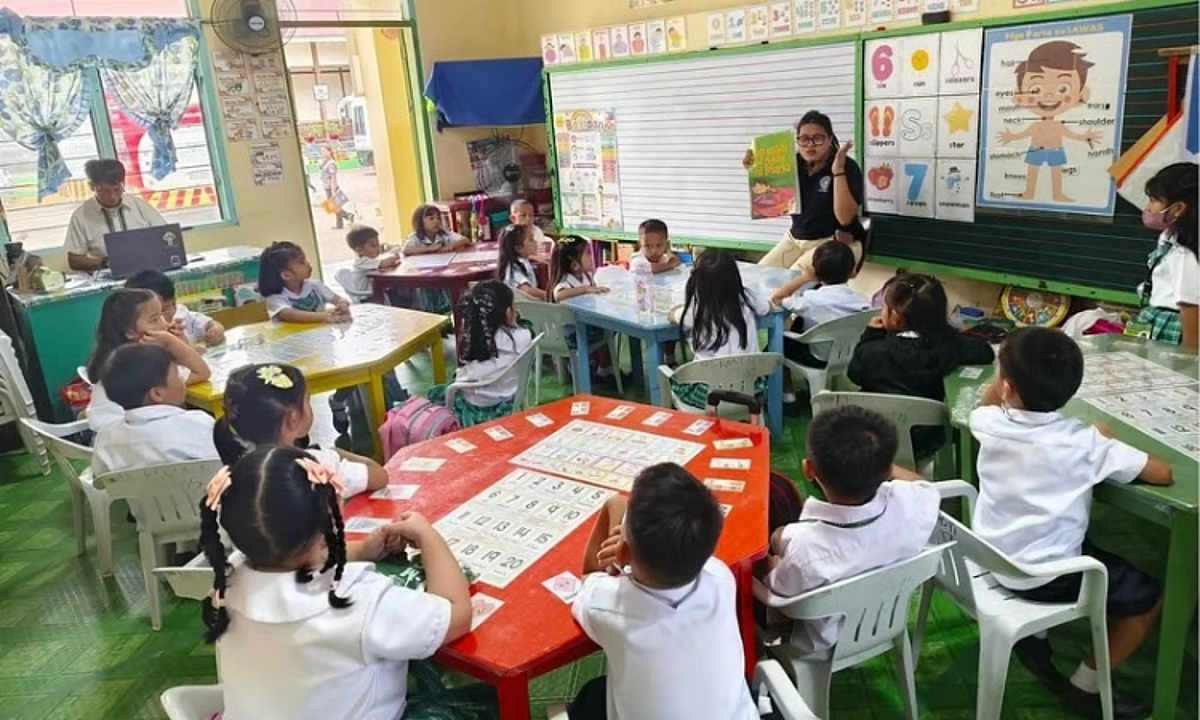
About 45 percent of Grades 1 to 3 pupils in Davao City public schools began School Year 2026-2027 at the two lowest reading proficiency levels, according to the Second Congressional Commission on Education (Edcom 2), SunStar reported. This comes even though the share of struggling readers had fallen to 9 percent by the end of the previous school year.
Edcom 2 cited the Department of Education's (DepEd) Comprehensive Rapid Literacy Assessment (CRLA) for the start of the school year. Of 83,559 learners assessed in the city, 29,109 were at "Low Emerging" and 9,119 at "High Emerging," for a total of 38,228. Only 10,972, or 13 percent, were rated "Grade Level Ready." The commission raised concerns about whether reading gains were sustained over the break.
Davao City Schools Division Superintendent Reynante Solitario said struggling readers dropped from about 39,750 at the start of SY 2025-2026 to 8,064 by its end. He credited DepEd's Academic Recovery and Accessible Learning (Aral) Program, together with reading programs and school-based interventions. He added that the division ranked third among 11 division offices in Region 11 for having the lowest share of struggling readers. "While the progress is encouraging, the remaining number of struggling readers reminds us that our work is far from over," Solitario wrote.
Reading gaps continue into the higher grades. Solitario said only 25 percent of Grade 11 learners in the city were independent readers at the end of SY 2025-2026, while 46 percent were at the frustration level.
Across Davao Region, 48 percent of the 258,630 learners assessed were at the two Emerging levels, and 12 percent were grade-level ready. Nationwide, the figures were 45 percent and 14 percent.
Edcom 2 Executive Director Dr. Karol Mark Yee told local media the learning crisis built up over years of neglect. He said DepEd cannot solve it alone. According to Yee, areas where mayors personally monitor schools' reading progress have shown bigger improvements.
Yee also asked universities, especially those offering teacher education, to send students, professors and volunteers to tutor in DepEd's daily one-hour afternoon literacy sessions. He urged barangays and parishes to hold book drives, saying many Filipino families have no books at home. "So even if a child wants to read, there is nothing to read," he said, in translation.
Edcom 2's dashboard also shows that 13 barangays in Davao City, or 7.1 percent, have no Child Development Center. It also lists 2,244 children in the city, or 4.7 percent, as stunted, above the national rate of 4.3 percent for children up to two years old.
Why it matters for Davao
The data suggest reading gains among Davao City's young learners may fade over school breaks. Edcom 2 is calling on local officials, universities, barangays and parishes to help through tutoring and book drives.
This article was written by the DavaoNews desk with AI assistance, using reporting by SunStar. Facts come from the original report, which we credit and link below. Our editorial policy
Discussion (0)
Sign in with Google to join the discussion.
Sign in to commentNo comments yet. Start the conversation.